


What Is a Pittsburgh Potty? A Home Inspector's Complete Guide to That Lone Basement Toilet

By Nicole Brooks, CMI | Fine Line Inspections LLC | Pittsburgh, PA
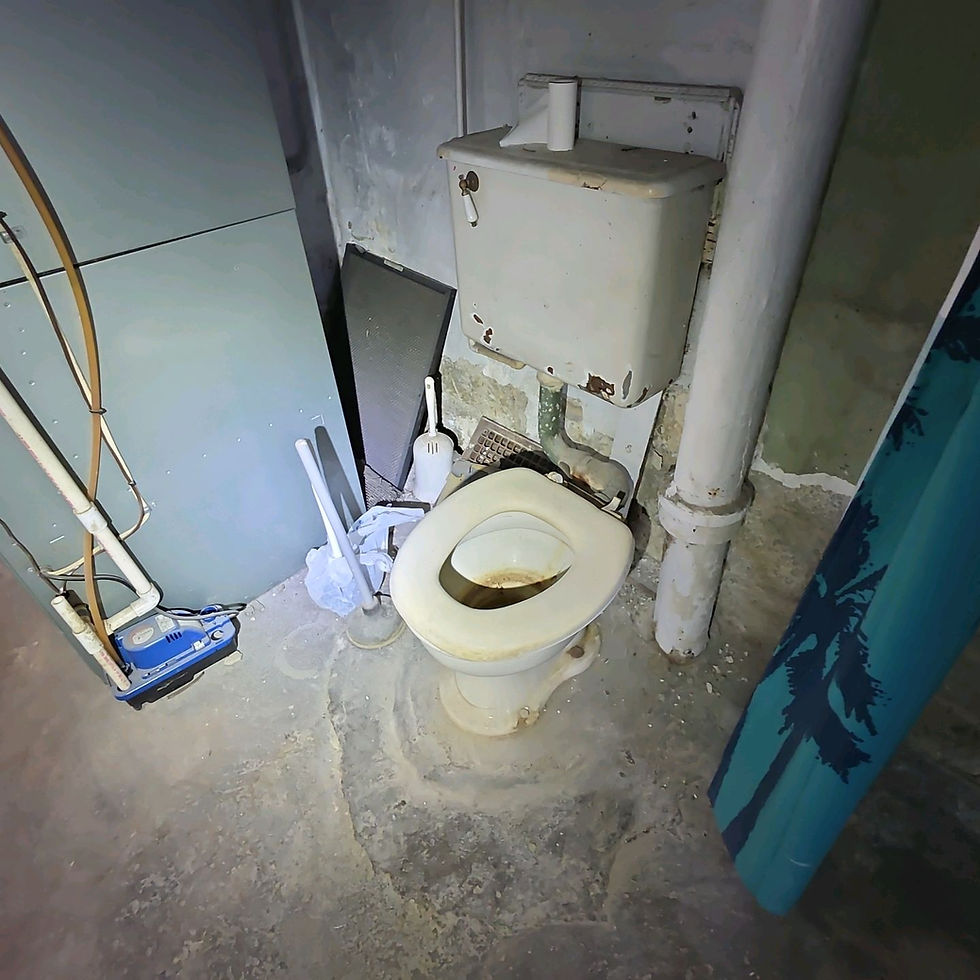
If you have ever toured an older home in Pittsburgh and headed downstairs to take a look at the basement, there is a decent chance you stopped in your tracks at some point and stared. Right there. Out in the open. On a concrete floor. No walls, no door, no curtain, no sink anywhere nearby.
Just a toilet.
Welcome to the Pittsburgh Potty, one of the most iconic features in western Pennsylvania real estate and one of the most misunderstood things I see on home inspections throughout Allegheny County, Washington County, and the surrounding communities.
If you are buying an older home in Pittsburgh, Bethel Park, Mt. Lebanon, Carnegie, Peters Township, Brentwood, or any of the surrounding boroughs and neighborhoods, there is a real possibility you are going to encounter one. Here is what you actually need to know.
What Is a Pittsburgh Potty?
A Pittsburgh Potty is a standalone toilet installed in the unfinished basement of an older home, typically without surrounding walls, a sink, or any other bathroom fixture nearby. Sometimes you will find a floor drain close by, or an old utility sink, or a basic shower setup that has seen better days. But the signature version is just one lone toilet sitting on bare concrete, completely exposed, serving no immediately obvious purpose.
They are most commonly found in Pittsburgh-area homes built between 1880 and 1930, though some homes from the 1940s have them as well. If you are buying a pre-war home anywhere in western Pennsylvania, this is a feature you should be prepared to encounter and a feature your home inspector should know how to evaluate.
The Real History of the Pittsburgh Potty (It Is More Interesting Than You Think)
Most people have heard the popular story: steelworkers and coal miners came home at the end of a brutal shift, went straight to the basement through a side entrance, cleaned up, and used the toilet before rejoining the family upstairs. It is a compelling image, and it fits Pittsburgh's identity as a hardworking industrial city beautifully.
There is truth in that story. But an architect named William Martin, who attended Carnegie Mellon University and has studied these fixtures in depth, offered Pittsburgh's NPR station WESA a more technically grounded explanation, and as a home inspector, this version gets my attention. The real reason these basement toilets were installed had less to do with worker hygiene and more to do with sewage infrastructure.
When these homes were built, Pittsburgh's sewer system was being pushed to its limits as the city grew rapidly. Sewer backups were a common and destructive problem. When a sewer line backed up, the sewage had to go somewhere. It would travel back up through the plumbing and overflow through whichever fixture sat lowest in the house.
If that lowest fixture happened to be a second-floor bathroom, the overflow would ruin the bathroom, damage the floor, drip through the ceiling of the first floor, and spread through the entire living space of the home. The damage could be catastrophic.
The solution was elegant in its simplicity: install a toilet in the basement, at the lowest possible point in the plumbing system. If the sewer backed up, the overflow would come up through that basement toilet and spill onto a concrete floor. Unpleasant, certainly, but infinitely easier to clean than sewage soaking through your upstairs floors and ceilings.
In other words, the Pittsburgh Potty was not primarily a convenience feature. It was a pressure relief valve for the entire plumbing system of the house. That is something worth knowing, both as a buyer and as a homeowner.
Should You Keep Your Pittsburgh Potty?
If you are buying or renovating an older Pittsburgh home and staring at one of these wondering what to do, here is my honest take as someone who has inspected hundreds of homes across Allegheny County and the surrounding area.
Do not remove it reflexively just because it looks odd.
A functioning basement toilet is a genuinely practical feature in a Pittsburgh home. The rough plumbing is already there, and that has real value.
During a renovation, when your upstairs bathroom is out of commission, that basement toilet is the reason your household keeps functioning. For a workshop, laundry area, or gardening setup, having a toilet on that level means less tracking through the house. And if you ever want to add a basement guest suite or in-law space, the plumbing head start you get from a Pittsburgh Potty means that project costs significantly less than roughing in a new stack from scratch.
That said, if the plumbing is original and showing significant age, the smart move is to have everything evaluated before you commit to keeping it. Know what you have, know what it will cost to maintain or upgrade, then decide.
A note on sewer scope inspections. In any Pittsburgh home with original or aging plumbing, I strongly encourage buyers to add a sewer scope inspection. A camera is run through the drain line from the home to the municipal connection, and it reveals root intrusion, cracking, and deterioration before it becomes your problem after closing. Sewer lateral repairs in Pittsburgh can run well into the thousands of dollars. A sewer scope is a small investment by comparison.
A Word to Buyers Coming from Out of Town
If you are relocating to Pittsburgh from another city, the Pittsburgh Potty is one of those local features that can genuinely catch you off guard. Buyers who grew up here barely notice them. Buyers from other markets sometimes see one and immediately wonder what is wrong with the house.
Nothing is wrong. It is Pittsburgh.
That said, buying an older Pittsburgh home is different from buying in a newer suburb or a city with more recent housing stock. The homes here have character, history, and in many cases plumbing, electrical, and structural systems that reflect their age. A thorough inspection by someone who knows these homes, knows what is normal for western Pennsylvania, and knows what deserves closer attention is not just a formality. It is how you protect your investment.
The Bottom Line
The Pittsburgh Potty is one of the most recognized features in Pittsburgh real estate, with a history that reflects both the city's industrial culture and the practical engineering challenges of early 20th century urban infrastructure. It is not a renovation that never got finished. It is not a sign of a problematic home. It is a feature with a purpose, and in many cases it is a feature worth keeping.
Schedule your inspection at finelineinspects.com
Nicole Brooks is a Certified Master Inspector and owner of Fine Line Inspections LLC, serving Pittsburgh and southwestern Pennsylvania. Learn more at finelineinspects.com.


Comments